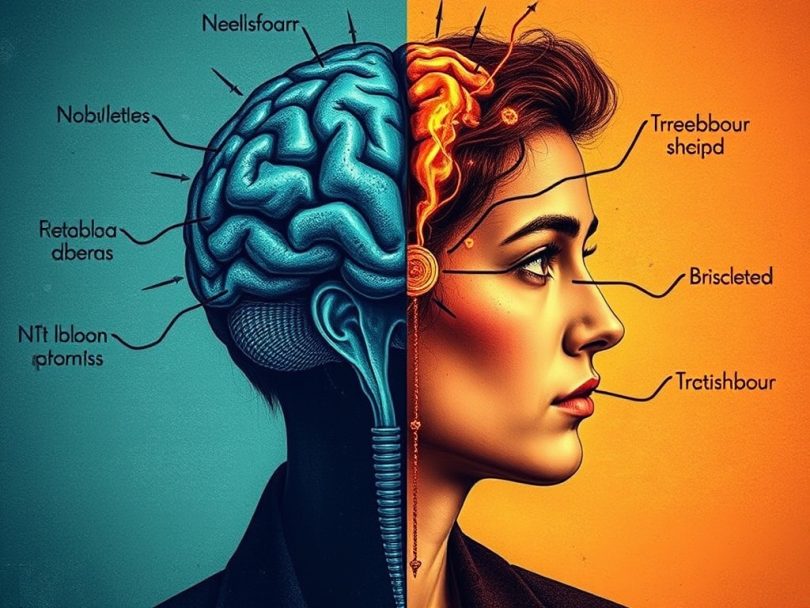
Here Is What It’s Like Inside an INTJ’s Brain
1. Constant Strategic Planning
Inside an INTJ’s brain, there’s a constant hum of strategic planning—like a private control room running multiple simulations at once. They’re always thinking three, five, or ten steps ahead, mapping out scenarios that most people haven’t even imagined yet.
Whether it’s career moves, relationship dynamics, or daily decisions, they’re calculating the most efficient, effective, and logical path forward. It’s not obsessive—well, okay, sometimes it is—but it’s more like a mental habit they can’t switch off.
Their brain naturally asks: “If this happens, what’s the optimal response? If that fails, what’s Plan B… and C… and D?” Even mundane choices—like what route to take to work or how to approach a conversation—get analyzed with surgical precision.
The fascinating part? They rarely announce these plans. Most people only see the results—a decision made calmly and confidently—without realizing it came from hours, days, or weeks of quiet mental calculations. To outsiders, INTJs may seem spontaneous, but in reality, they’re operating with a full blueprint behind the scenes.
And yes, this constant planning can make them impatient with uncertainty. INTJs like to know the moves ahead, predict outcomes, and control variables—because in their minds, preparation isn’t paranoia; it’s just logic in action.
2. Relentless Pattern Recognition
INTJs’ brains are basically wired to spot patterns everywhere—it’s like having a mental detective constantly on duty. They notice inconsistencies, trends, and connections that most people completely miss.
Whether it’s in data, conversations, relationships, or even abstract ideas, their minds are always scanning for the underlying logic that ties everything together.
This pattern recognition isn’t just for fun—it drives their decisions, strategies, and predictions. They’ll see the subtle cues in a situation, connect them to past experiences, and anticipate outcomes before anyone else even realizes what’s happening. It’s like playing chess in their head with real life as the board.
The fascinating part? They often see patterns in things others think are unrelated. A random comment, a small behavior, or even an overlooked detail can trigger a chain reaction of insights in an INTJ’s mind. And they rarely share these observations immediately—it’s usually processed, filtered, and stored for later action.
This skill makes INTJs excellent problem-solvers, strategists, and advisors. They understand the world not just as it appears, but as a complex system of interrelated forces—and they’re always quietly predicting the next move.
3. Quiet Emotional Processing
INTJs feel emotions, but their approach is… let’s say, unconventional. Instead of wearing their heart on their sleeve, they process everything internally, often analyzing the logic behind the feelings before allowing themselves to react.
They’re not emotionless—far from it. It’s just that their default mode is observation and understanding rather than immediate expression.
If something makes them angry, sad, or even deeply happy, their first instinct is to figure out why, what it means, and how it affects the bigger picture. Only after this internal audit do they respond—and sometimes the response is subtle, controlled, or even delayed.
This quiet emotional processing can make INTJs seem distant or cold to outsiders. People might think they don’t care, but in reality, they’re just experiencing emotions on a slower, analytical timeline. They want to understand it fully before showing it, which means their emotional depth is often hidden beneath a calm exterior.
The upside? INTJs rarely overreact or act impulsively based on emotion. The downside? Sometimes even people close to them feel like they’re “too rational” or “hard to read.” But to the INTJ, this method is practical—understanding emotions internally allows them to handle situations with clarity, precision, and purpose.
4. Mental Multitasking Overdrive
INTJs don’t just think in a straight line—their minds are juggling multiple threads at once, like a high-speed mental orchestra. While others focus on one task, an INTJ is simultaneously analyzing a problem, predicting outcomes, planning future steps, and quietly observing patterns in their environment.
This multitasking isn’t chaotic; it’s highly organized in their own internal logic. Their brain naturally shifts between projects, strategies, and ideas, often without them even noticing.
You might see them calmly reading a book, but inside, they’re also planning a career move, evaluating a conversation from last week, and mentally drafting an email. All at once.
The fascinating part? This mental juggling allows INTJs to connect dots that others never see. By holding multiple ideas in parallel, they can synthesize solutions, strategies, or insights in ways that seem effortless—even magical—to outsiders.
Of course, this constant mental activity can make it hard for them to “switch off.” INTJs often appear lost in thought, even during downtime, because their brain is always running simulations, planning, and analyzing behind the scenes.
It’s both a superpower and a challenge—brilliant ideas come easily, but rest sometimes doesn’t.
5. Inner Critic on Full Alert
Inside an INTJ’s brain, the inner critic never sleeps. It’s like having a highly skilled editor constantly reviewing every thought, decision, and idea for flaws, inconsistencies, or inefficiencies.
Nothing escapes its attention—from a tiny social misstep to a major life decision, everything gets quietly analyzed and rated.
This can make INTJs perfectionists in everything they do. They set incredibly high standards for themselves, always asking: “Is this the best way? Could it be improved? Am I missing something?” It’s not self-loathing—it’s rigorous self-assessment designed to optimize outcomes and avoid mistakes.
The tricky part? This inner critic isn’t always rational to outsiders. People might see INTJs hesitating, revising, or overthinking and assume they’re insecure. But in reality, this is just their brain fine-tuning every move before it’s executed. Every idea, plan, or action is filtered through a precise internal system of quality control.
The upside? INTJs produce results that are usually extremely thoughtful, effective, and well-considered. The downside? They can be overly self-critical, rarely giving themselves credit for successes until everything is perfect—or close enough to it.
6. Curiosity That Never Sleeps
INTJs have a brain wired for constant exploration. Their curiosity isn’t casual—it’s relentless, insatiable, and highly focused. Once something sparks their interest, they dive deep, often obsessively, until they fully understand it.
The world isn’t just a place to live in; it’s a puzzle to solve, a system to map, and a concept to master.
They ask questions constantly, mentally and sometimes out loud: “Why does this work this way? What’s the underlying principle? How can this be improved?” No detail is too small, no theory too complex. They’re fascinated by patterns, systems, and the mechanics behind ideas, behaviors, and even people.
This endless curiosity fuels their expertise and insight. INTJs often know things before anyone else does—not because they’re “book smart,” but because they’ve relentlessly explored possibilities and gathered knowledge in their area of interest.
The flip side? Their focus can make them seem absorbed, aloof, or even intimidating. While others are satisfied with surface-level understanding, INTJs are already three layers deep—mentally dissecting, theorizing, and predicting outcomes—all before breakfast.
7. Selective Social Energy
INTJs treat social interaction like a strategic resource—because, in their minds, it is. They don’t waste energy on small talk or meaningless chatter. Instead, they observe, analyze, and decide who and what is worth engaging with.
Every interaction has a purpose, even if that purpose is simply gathering information or testing a theory about people.
They’re not antisocial—they just have high standards for mental stimulation. Being around energy-draining or superficial people can feel exhausting, so they naturally gravitate toward meaningful, intellectually engaging, or goal-oriented conversations. Small talk? Only if necessary.
This selective approach often makes INTJs seem distant, aloof, or private. But it’s not rejection—it’s preservation. They need to protect their mental bandwidth for the projects, strategies, and relationships that truly matter.
And when they do invest their energy, it’s concentrated, intentional, and deeply impactful.







Leave a Comment